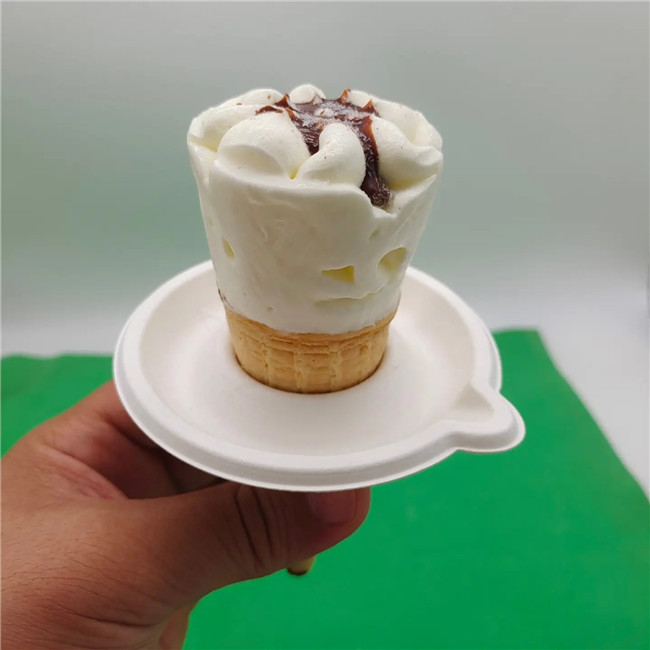
Can bagasse be made into paper tray packaging?
Advantages of bagasse pulping
Sugarcane bagasse is a by-product of sugar mills and a typical raw material for paper fiber. Sugarcane is a stem-like plant fiber stem-like plant fiber raw material. The average fiber length is 1.47-3.04mm, and the bagasse fiber length is 1.0-2.34mm, similar to broadleaf fiber. Sugarcane bagasse is a good raw material for papermaking.
Bagasse is a grass fiber. It is easy to cook and blanch. It consumes fewer chemicals and contains less silicon than wood, but less than other grass fiber raw materials. Therefore, bagasse pulp and alkali recovery technology and equipment are more mature and simpler than other straw fiber raw materials. Therefore, bagasse is a cheaper raw material for slurry.
Businesses need to tap into renewable resources quickly. Bagasse utilizes low energy-related emissions, helping to reduce global warming. It requires less energy to make because it's just fiber left over from sugar processing.
What's more, it's durable and not affected by temperature, making it a useful material in consumer spaces.
Notable advantages of bagasse include:
Microwave and oven safe
Hot liquid can handle 120℃
Oven safe up to 220 degrees Celsius.
Bagasse market
Research shows that the molded pulp packaging market may exceed US$4.3 billion by 2026.
It’s time to look into a truly sustainable resource for manufacturing mold pulp products, namely sugar cane waste. Since sugar cane is a rapidly growing staple food, we have access to more sustainable alternatives.
Smarter choice
Using agricultural waste is a better option. This waste by-product is already being produced, rather than being cultivated like wood, which takes many years to grow. Bagasse requires much less investment than paper to produce the same amount of pulp.
This is an overlooked opportunity when looking for truly sustainable packaging. About 80 cane sugar-producing countries have the potential to better utilize the fibrous residue known as bagasse.
Design advantages of bagasse
Practical benefits include space savings. Nesting and stacking can reduce storage costs by 70%. Protection is another benefit bagasse provides for outstanding shock and vibration cushioning. Additionally, bagasse can be designed to your specifications, and custom design options are a big advantage.
It provides price stability with minimal dependence on oil, gas and resin price fluctuations and gives you long-term price guarantees. It also costs less than other protective packaging options like foam and thermoformed plastic.
Products made from sugarcane bagasse do not require a PLA liner and can be used in both home and industrial composting because it is naturally oil- and leak-proof. Bagasse is a great compost material, so its second life as packaging is great for the environment.
Sustainable development in the future
Bagasse doesn't need any misleading labels, biodegradable labels. It can be home compost or industrial compost. What happens with [sensitive word] is that these products will end up in your home compost, but they may end up being recycled (since they look the most like paper products), being incinerated, and ending up in a landfill.
It is important to note if industrial-component materials are placed in landfills. Home composting is something you can do. Composting reduces the production of methane (a major source of greenhouse gases) and provides a range of economic and environmental co-benefits.
HUATAO provide more than 80 pulp molding equipment specifications. Including:
Pulp Mold Machine
Egg Tray Molding Machine
Egg Carton Molding Machine
Fruit Tray Molding Machine
Molded Fiber Tableware Machine
Hot Press Shaping Machine
Mold For Pulp Molded Machine
Pulp Mold Stacker
PE Rope Pulp Mold Packing Machine
Whether you need help with equipment selection, process optimization, or design customization, our team can help. We have the expertise and knowledge to analyze your project needs, identify challenges and develop innovative solutions.